Author: Robert D

  • Whitley Heights: What Hollywood living was really the good old days

    Whitley Heights: What Hollywood living was really the good old days

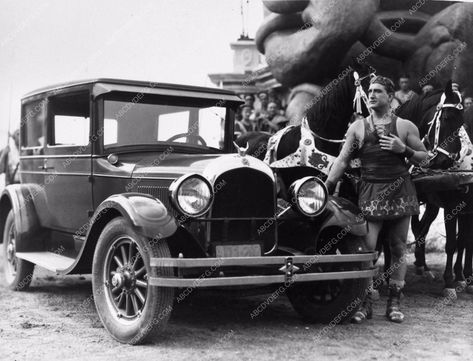
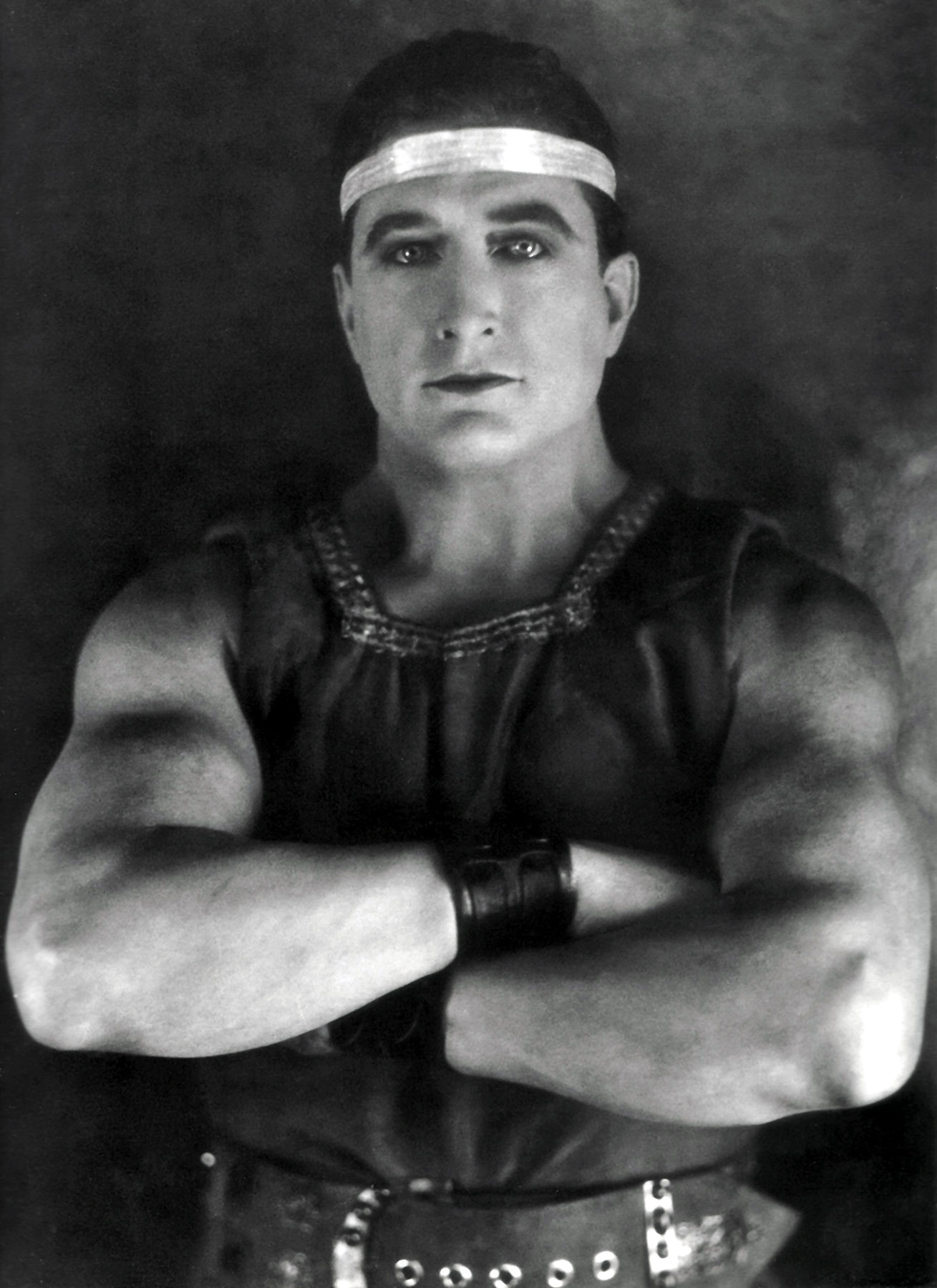
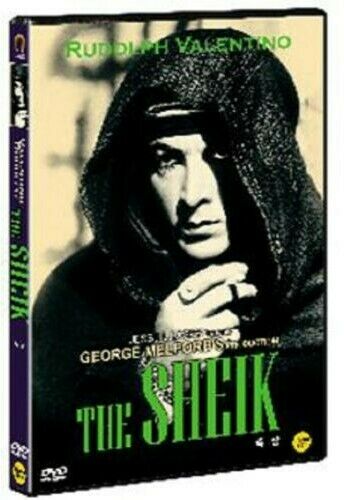
    In the 1920s Rudolph Valentino and Francis X. Bushman lived just across the street from each other in Whitley Heights, on the small hill that rises above Highland and Franklin avenues.

    Looking at the narrow street today, it is hard to imagine those flamboyant egos sharing it – Valentino in a phaeton with his silver cobra emblem and Bushman in hi lavender Rolls-Royce.

  • Whitley Heights Walking Tour #2

    Before Beverly Hills existed the rich and famous stars of Hollywood lived in a Mediterranean style neighborhood called Whitley Heights. This gem of a neighborhood still remains today and is virtually untouched.

    In this episode you’ll see homes and hear stories whose subjects include Barbara La Marr, Jean Harlow, Beverly D’ Angelo, Jay Stewart, Army Archerd, Hobart J. Whitley, Rosalind Russell, Rock Hudson, Sidney Franklin, James Hilton, Joseph Schildkraut, Beulah Bondi, Irving Thalberg, Norma Shearer, Maurice Chevalier, Hedy Lamarr, Chester Morris, Groucho Marx, William Bast, Eugene O’ Brien, Adela Rogers St. John, Richard Barthelmess, Marion Davies, William Randolph Hearst, Patty Hearst, and Wesley “Freckles” Barry. You can also see some film locations from the films “Hail, Caesar!” and “The Day of the Locust.”

  • At the Heights of Mediterranean Style

    At the Heights of Mediterranean Style

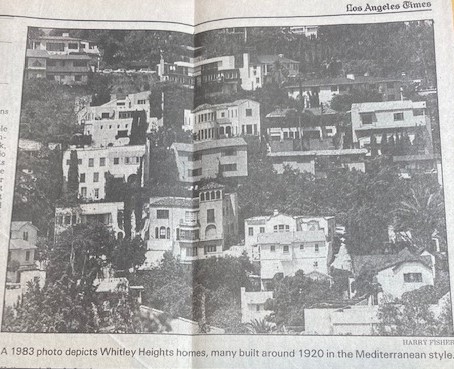
    Whitley Heights, located on a prominent hill overlooking Hollywood and now generally bounded by Franklin and Highland Avenues and U.S. 101. It was shaped and styled in the late 1910’s and early 20’s by Hobart J. Whitley, one of the region’s earlier real estate moguls who had become a major booster of the Mediterranean look.

    For a time in the late 20’s before they began flocking to Beverly Hills Whitley Heights was a favorite roost of film stars, including Rudolph Valentino, Francis X Bushman and Marie Dressler and was the scene of some fabled parties. Among those who later had homes there wer Gloria Swanson, Bette davis and Tyrone Power.

    The result is that Whitley Heights is styled very much in the spirit of a hil town, albeit a wealthy private one, with winding narrow streets edged by proud stucco, structures decorated with glazed tile and ironwork. So pedestrians do not have to compete with cars, select streets are connected by public stairs that rise up the lush hillside.

    Los Angeles Times May 21, 1988 by Sam Hall Kaplan

  • Hotel Hollywood December 18, 1902

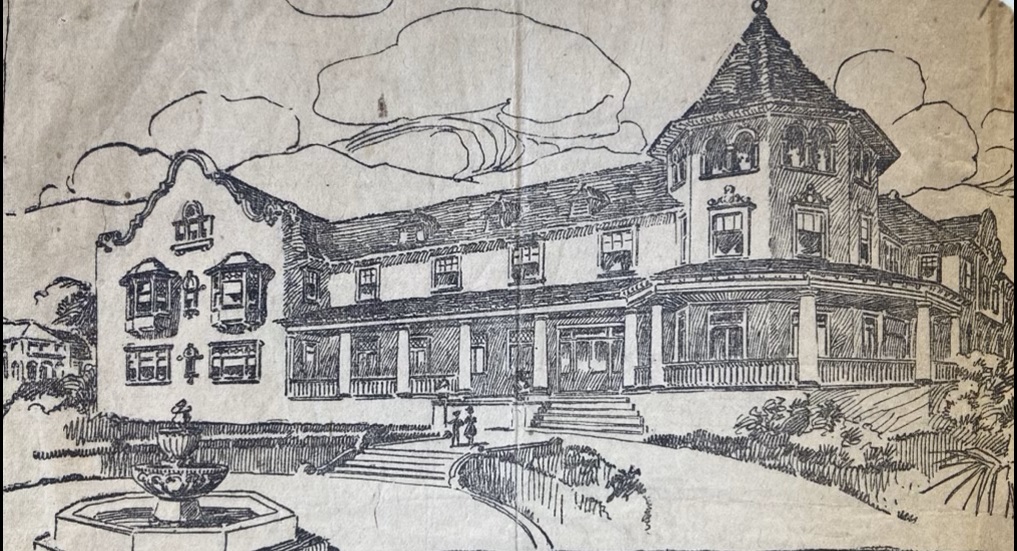
    Drawing from an article: Charming Hollywood December 18,1902

    Beautiful Hollywood

    Mr. Whitley was the central figure, the moving force that accomplished results. Having known him intimately for 16 years, and what he has acomplished in other fields, his achievements in Hollywood are really no surprise to us.

    Has it required much money to carry on this great work? Yes, a barrel of it. but in Mr. Whitley’s understanding there is no “cheese-paring” or counting of cost. He has paid out many thousands of dollars for electric lighting the street of Hollywood, and recently, at great expense installed the first switch to light Wilcox avenue by the incandescent plan – a light suspended from each pole, to prove the utility and striking dffect. It makes a pretty scene. Now, Prospect avenue for several blocks west is illuminated in the ame manner and is evoking great praise.

    It would be a great card if the entire town could be illuminated in the ame manner – a fairy-land in the foothills.

    Article in the Westen Graphic by A. A. Bynon April 27th 1903

  • Western Star J. Warren Kerrigan in Whitley Heights

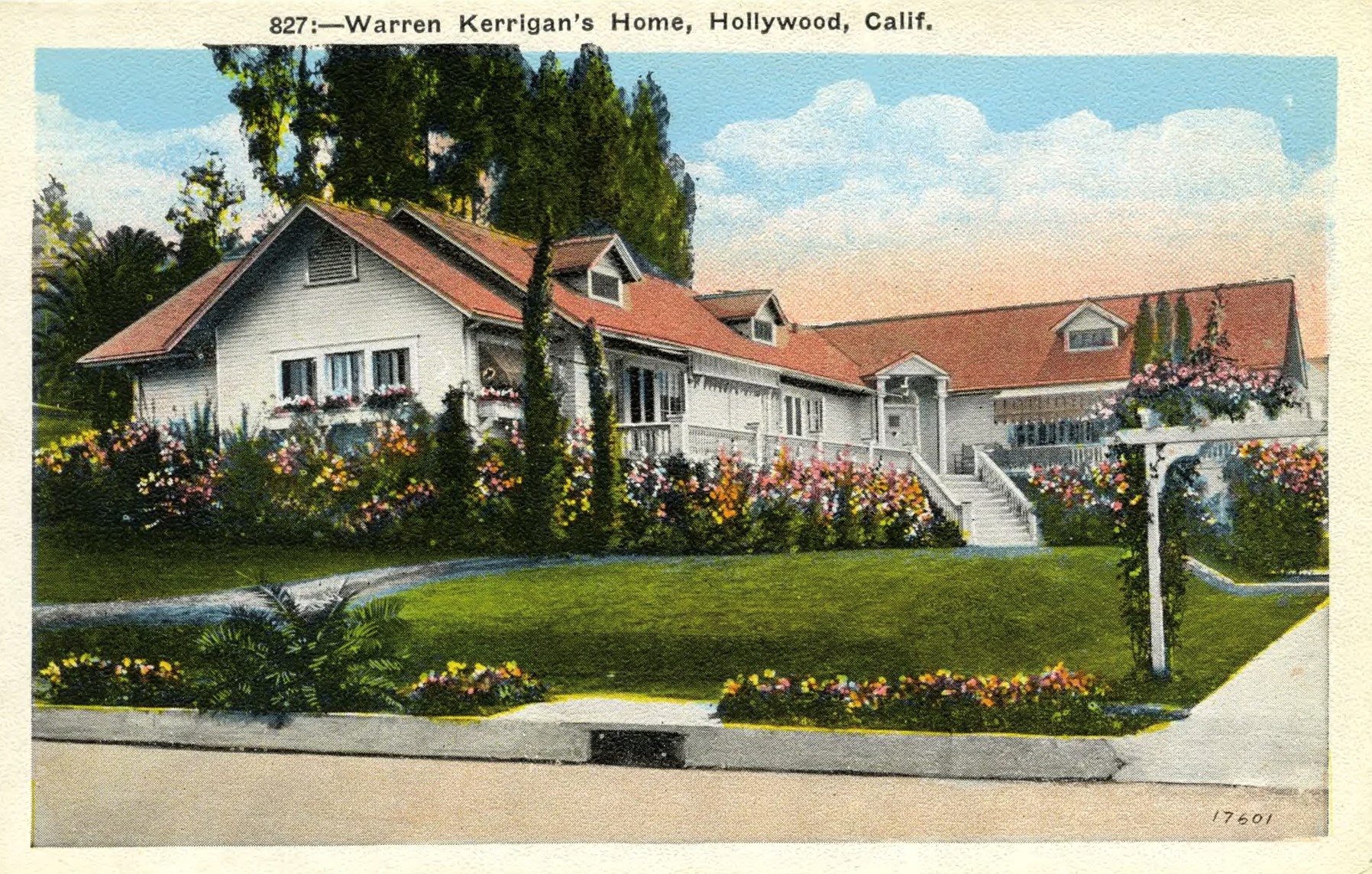
    One of the few homes that narrowly missed the Hollywood Freeway’s path was 2307 Cahuenga, the former residence of western star J. Warren Kerrigan.
    Built in 1917, the L-shaped beauty was his dream home. “I think it is so restful in this sunny land, don’t you?” he gushed in an interview at the time.

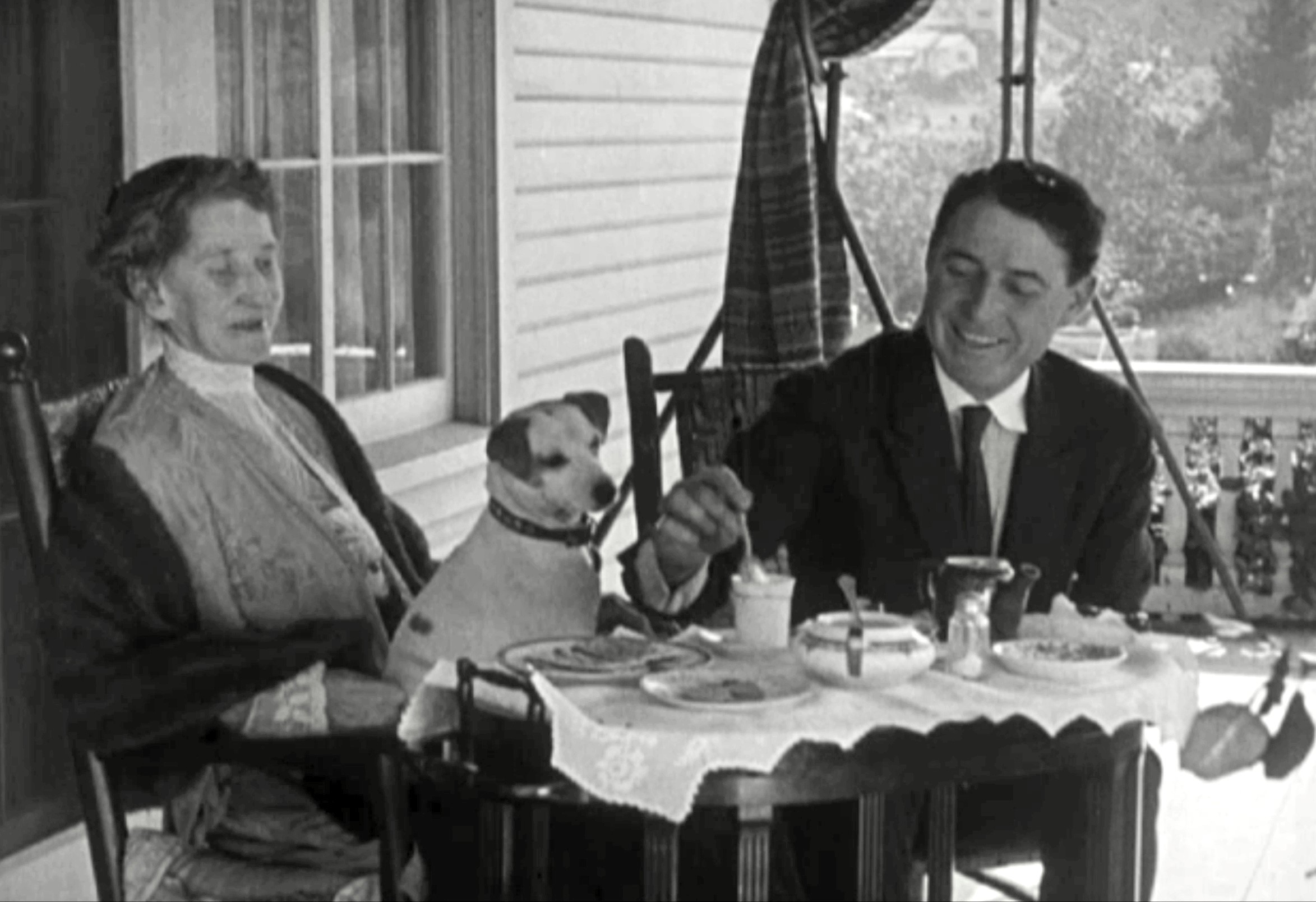
    For three decades, Kerrigan lived here—just around the corner from Gene Autry on Whitley Terrace—with his mother Sarah, manager of the Mary Pickford Company (pictured together on their porch).

    Following his 1947 death, new owners moved in and honored the actor with a portrait from his 1923 film The Covered Wagon in the living room. They also did light renovations, which Mrs. William Francis felt displeased Kerrigan in the afterlife. “Sometimes there is…a swishing noise,” she said in 1957. “We make a joke of it. We say it’s Kerrigan’s ghost. We don’t really believe it. That would be foolish…perhaps it’s only an echo from the freeway.”
    Credit article from Whitley Heights News 2022

  • H. J. Whitley Annual Progress Edition of The Hollywood Citizen Part 3

    Banking and mortgage loans has been Mr. Whitley’s business all his life and in most of the towns he has built, banks were established with him as officer of director in each. He is at the present time interested in several banks, being an officer in four and vice-president of the Home Savings Bank of Los Angeles.

    Twenty-eight years ago, a Bismark Dakota payer ran an article headed “Whitley the Banker.” It went on to say “It will be pleasing to the many friends of Mr. H. J. Whitley to learn that he is becoming one of the greatest bankers in the Northwest. He is here for the purpose of engaging in the same business, being a young man of means and a firm believer in Dakota and one of her best workers.”

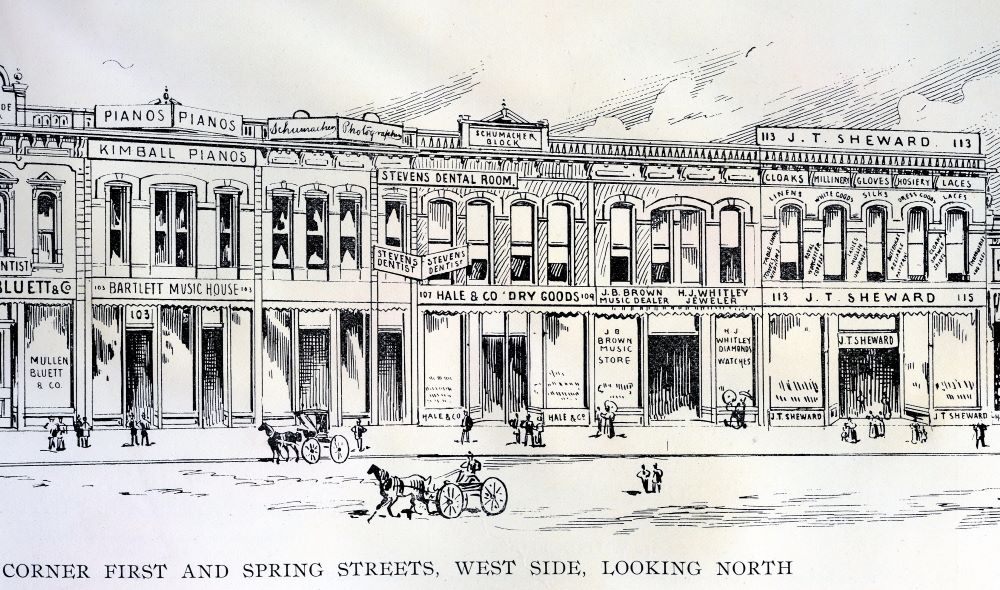
    Mr. Whitley organized the bank of Hollywood, now the First National and the lots he gave for the bank building were sold at a large profit, thus creating a fine surplus for the institution. In addition to banking he owned the H J Whitley Jewelers in Los Angeles.

  • H. J. Whitley Annual Progress Edition of The Hollywood Citizen Part 2

    H. J. Whitley’s Hollywood holdings amounted to 480 acres and the good roads, boulevards, electric lines and the roads through Cahuenga Pass and Laurel Canyon are largely his work.

    Hollywood with all its beautiful features having been created, H. J. Whitley turned his eyes to the great San Joaquin Valley. Here again he associated with him a number of businessmen of the first magnitude to march by his side. A tract of 45,000 acres were secured, where at a rub of the Aladdin lamp, Corcoran sprang into being. The new city had its bank, schools, hotel and other industries of a prosperous community, developing into one of the greatest dairying and cotton sections, largely though Whitley’s efforts.

    Whitley San Fernando Valley Home

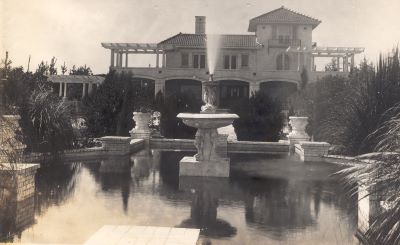
    Corcoran being created, Whitley next undertook a notable development project in the San Fernando ago, and take a spin along Sherman Way, one of the finest boulevards in the world, take a run through the subordinate systems of boulevards and make a survey of the electric line now building. If anything, more astonishing has ever been created within twelve months out of the raw, it would be difficult to name it. Over five million dollars’ worth of property has already been sold off this tract and Mr. Whitley’s general management has resulted in the greatest development anywhere in the United States or perhaps in the world. Mr. Whitley has 80 acres in his home living rooms, dens, billiard parlor and library. The grounds will be made beautiful by the most expert landscape gardener. With such a country house and the hill home in Hollywood, even H. J. Whitley might be satisfied.

    Part Two Annual Progress Edition of the Hollywood Citizen page 28

  • H. J. Whitley Annual Progress Edition of The Hollywood Citizen

    The Master Builder of Hollywood is Mr. H. J. Whitley, who has been likened to Aladdin and his lamp, for wherever he has appeared towns have sprung up as if by magic. There is a string of them from the Mississippi River to the Rocky Mountains along the Northern Pacific and along the Rock Island in Kansas, Texas and Oklahoma. He began operations in California in 1894.

    The great premature boom in Los Angeles real estate had come and gone, leaving the country dotted over with moribund suburban undertakings. Hollywood was one of these. But it was just this failure, which has remained asleep for fourteen years that attracted the city builder. Whitley was always associated with big men and knew the value of such associations. When, therefore, he would resurrect Hollywood, knowing the task before him, he picked out a number of associates he knew could and would stand with him shoulder to shoulder. The practical management was, however, in the hands of Mr. Whitley. Through his efforts the waterworks were put in, and the electric works. He set himself to the creation of boulevards and induced Gen. Sherman and E. P. Clark to run an electric line out to Hollywood.

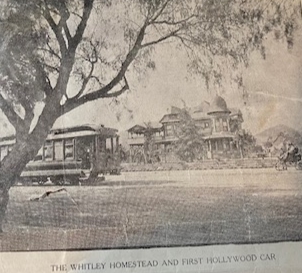
    Picture below from the Hollywood Citizen is of the Whitley Homestead and First Hollywood Car on Hollywood Blvd and Whitley Ave.

    Whitley knows the truth of the adage, “To make money, you must spend money. At Hollywood he gave the reservoir sites and wells now worth $100,000, the original site for the Hollywood Hotel and the block on which the First National Bank stands. He spent large sums of money in opening up Sunset Boulevard. Wherever Whitley has been interested and any desirable improvement has lagged, he has been prompt to put his hand in his pocket and lend it the necessary financial aid. He is also a far sighted man. Some years ago, he gave a bonus of $5000 to have the electric railroad extended up Highland Avenue and through Cahuenga pass.

    Part One
    Annual Progress Edition of the Hollywood Citizen page 28

  • Whitley Heights: When Hollywood Living Was Really Good Old Days

    Whitley Heights: When Hollywood Living Was Really Good Old Days

    In the 1920’s Rudolph Valentino and Francis X. Bushman lived just across the street from each other in Whitley Heights, on the hill that rises above Highland and Franklin avenues.
    Looking at that narrow street today, it is hard to imagine those flamboyant egos sharing it -Valentino in a phaeton with his silver cobra emblem and Bushman in his lavender Rolls-Royce.

    But with neighbors like theirs they might have gone unnoticed. Richard Barthelmess, who Lillian Gish described as “the most beautiful man who ever went before a camera,” lived in a nearby villa where he was often visited, it was said by equally beautiful Norm Talmadge while she was still the wife of the powerful producer Joseph Schenck.
    (more…)

  • Hollywood Enclave with Spirit By Sam Hall Kaplan

    Hollywood Enclave with Spirit By Sam Hall Kaplan

    Hollywood Heights formal block party celebrating its community spirit is held every August, the informal party is every day.

    Climbing the hills northwest of Highland and Franklin avenues, the community’s cluster of Mediterranean, Moorish and Modern style houses and apartments is one of those architectural enclaves in the varied landscape of Los Angeles that manages to be inclusive and welcoming.

    Blossoming vines spill over stucco and concrete block walls lining twisting, turning streets; potted plants sit on window sills and terraces, and occasional tile work and individualistic doorways peek out from behind wrought-iron fences.
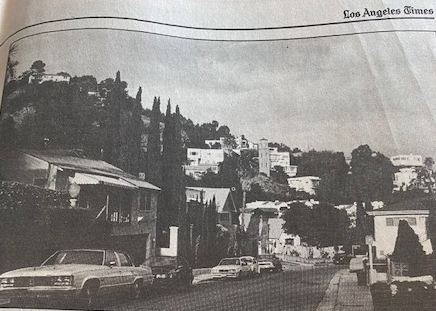


    Then there are the hillsides laced with meandering public paths and stairways tunneling through profusions of wild vegetation and presenting, from raw crests and mélanges of balconies, breathtaking views of Hollywood and the city beyond.

    The setting and a sprinkling of landmark structures, including singular houses by Frank Lloyd Wright and his son, Lloyd Wright, have lent themselves well to a strong neighborhood identity and spirit.

    Hollywood Heights has needed this spirit, for like so many other communities in and around Los Angeles over the last few years it is involved in a continuing effort to keep its quality of life from being nibbled away by avaricious developers and insensitive bureaucrats.

    These efforts have included fighting off a proposal for an out-of-scale and out-of-character housing complex on the site of a dated bungalow court by helping to get the court declared a landmark and get the county to assume responsibility for recycling.

    Los Angeles Times January 24, 1987