Author: Robert D

  • LOS ANGELES AND HOLLYWOOD UNITE IN OPENING OF SUNSET BOULEVARD

    LOS ANGELES AND HOLLYWOOD UNITE IN OPENING OF SUNSET BOULEVARD

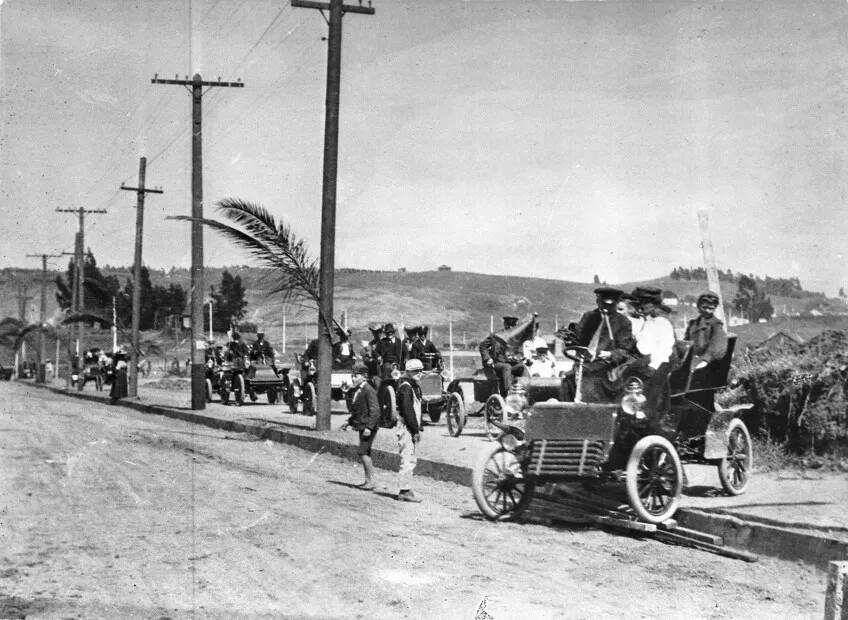
    Sunset Blvd Opening 1904

    LOS ANGELES AND HOLLYWOOD UNITE IN OPENING OF SUNSET BOULEVARD

    Big Procession of Vehicles Passes Over New Highway, Which Is One of the Best in the State

    Los Angeles and Hollywood united yesterday in celebration of the opening of Sunset boulevard and its adjacent systems. The splendid highway was inspected by nearly 2,000 Los Angeles people, who proceeded to Hollywood in vehicles of every sort, ranging in design from a high-geared automobile to a goat cart.

    The boulevard is now practically completed, representing an outlay of about $350,000. When the procession reached the end of the street in Hollywood, a genuine celebration was held, at which prominent men of Hollywood and Los Angeles spoke. The affair was under the auspices of the Hollywood Board of Trade and the Sunset Boulevard Improvement Association.

    It was a gala day for Hollywood, for Los Angeles and for the territory intervening. Gen. M. H. Sherman and E. P. Clark of the Los Angeles Pacific railway, H. J. Whitley—known as the champion of Hollywood—were among the notable guests.

    Los Angeles Herald, Volume XXXI, Number 229, 15 May 1904
    https://cdnc.ucr.edu/?a=d&d=LAH19040515.2.78&srpos=15&e=——190-en–20–1–txt-txIN-H+J+Whitley——-

  • Spirit of Enterprise: Who Originate the Hollywood Boulevard Idea and Who Pushed It?

    The early settlers of the Cahuenga Valley are often heard to remark that up to a very few years ago it was almost impossible during the rainy season to drive from any part of the valley to the city of Los Angeles, owing to bad condition of the roads.
    From time to time a little work was done here and there, but no organize effort was made to put the roads of the valley in proper shape.
    There seems to have existed a spirit of jealousy among the earlier residence, so much so that if the country attempted to do any work in one section of the valley, the Supervisors and Road Overseer were immediately charged with favoritism. Thus standing in their own light the property owners themselves prevented what little work might have been done in the otherwise favored Cahuenga Valley.
    Instead of having the best roads in the county, which they were entitled to, the Cahuenga roads were known as about the worst. This, of course was before the term of the present Supervisors.
    In the early part of 1899, H. J. Whitley, a gentleman living in Hollywood with large interest in Los Angeles and eastern cities and with long experience in public work, foresaw the immense benefit which would accrue to the valley, as well as the convenience to the residents, if a system of good roads, a boulevard and a foothill branch of the electric lines could be built from the city to the sea. Mr. Whitley was not only instrumental in developing Hollywood Boulevard but also spearheaded Sunset Boulevard. To learn more go to: https://thefatherofhollywood.com/images/pdf/NewCahuengaValleyBoulevardLATimes5-26-1901.pdf

  • How History Gets Distorted

    How History Gets Distorted

    Over the years, I have spoken to audiences around the world on television, radio talk shows, newspaper interviews, and at Hollywood Academy Award functions. Many times, I have been asked, “How did Hollywood get its name?”

    To start with, I am going to share with you the way my great-grandmother wrote it in her handwritten memoirs. While on their honeymoon in 1886, they rode horses out to the foothills of the Cahuenga Valley. They dismounted near the top of the hill to look at the view of the entire valley. Along came a Chinese man riding in a wagon. He stopped, got out of the wagon, and politely bowed. H.J. Whitley asked him what he had been doing. The man said in broken English, “Up early. Work hard. Hauly wood.” The man was hauling wood.

    With that, H.J. had an epiphany. He decided to name the new town he planned to build there Hollywood. “Holly” would represent his British roots and “Wood” his Scottish ancestry.
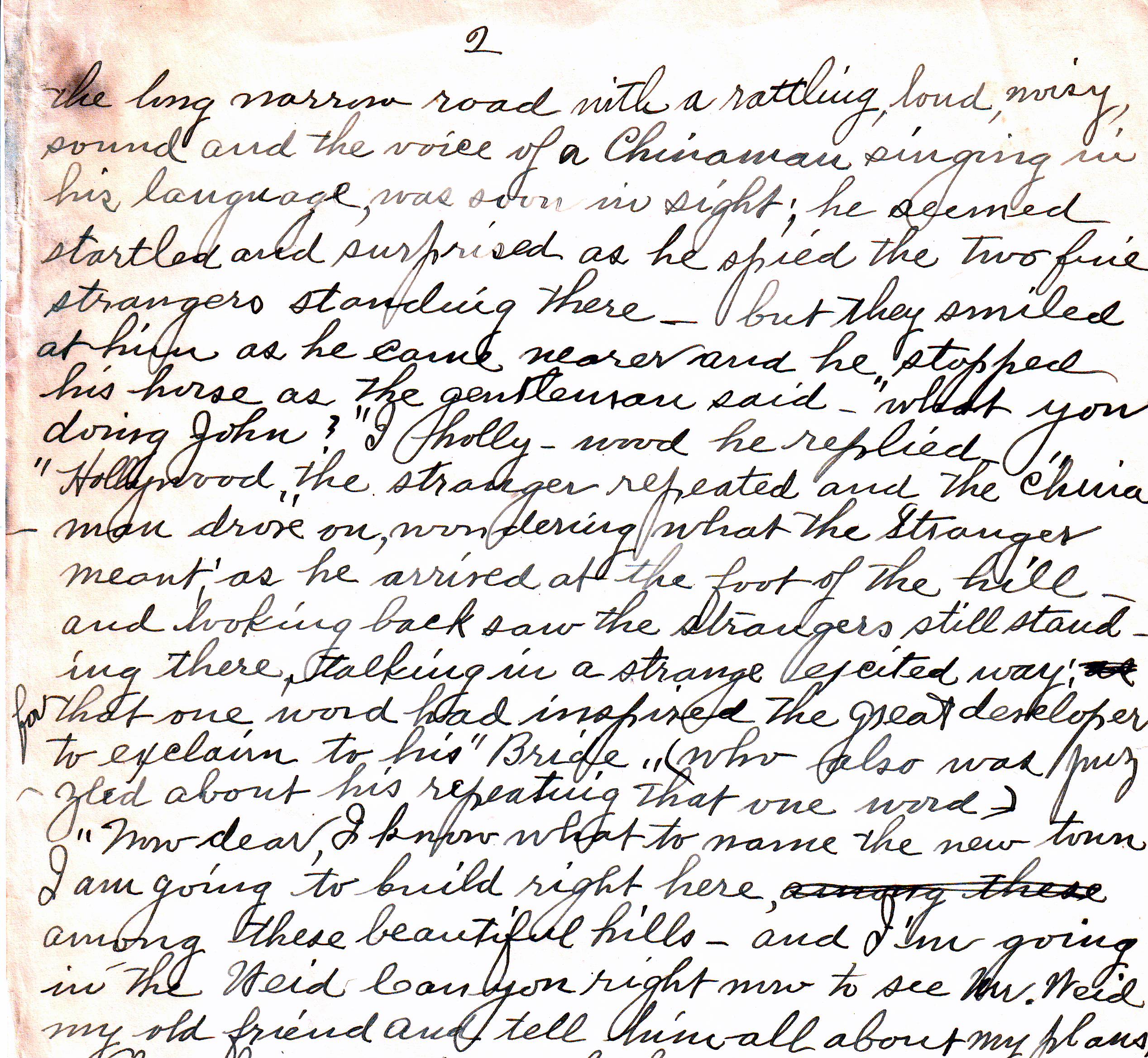
    Gigi Whitley handwritten diary.

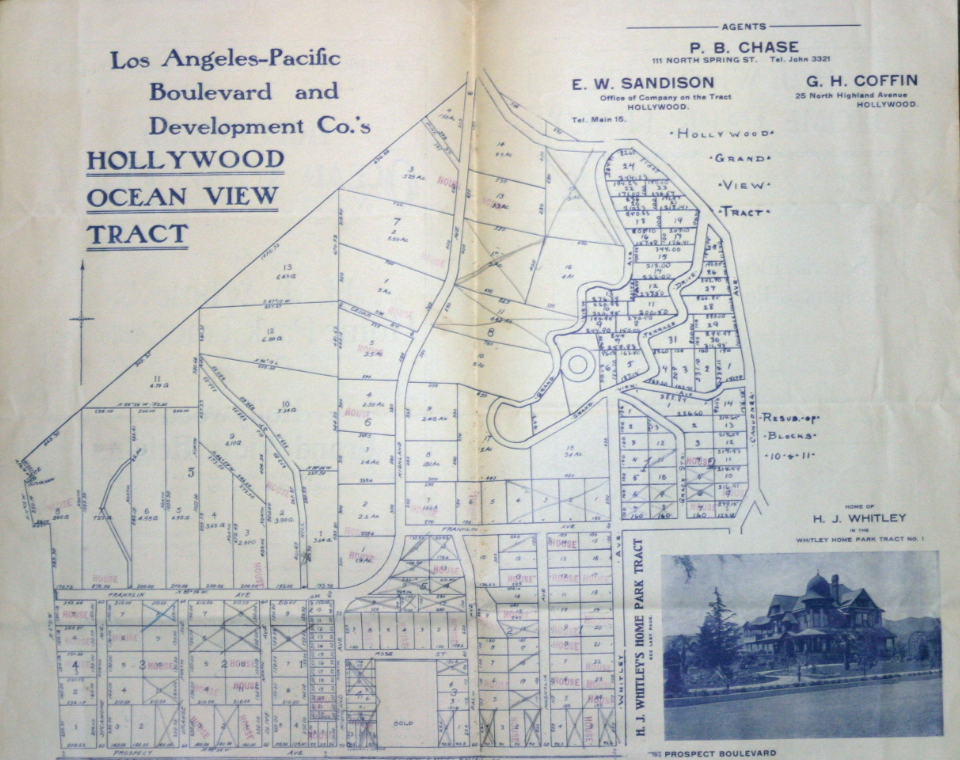
    The next day, he rode back to Hollywood (Cahuenga) and obtained a verbal contract to buy the 480 acres from Mr. Hurd. A handshake was used to finalize the deal. A picture of the tract of land (subdivision map) that was purchased is below. The center of the land is Highland and Hollywood Boulevard. The square on the bottom right is where the Whitley Estate was located and the site where the first Hollywood Studio filmed on October 26, 1911.
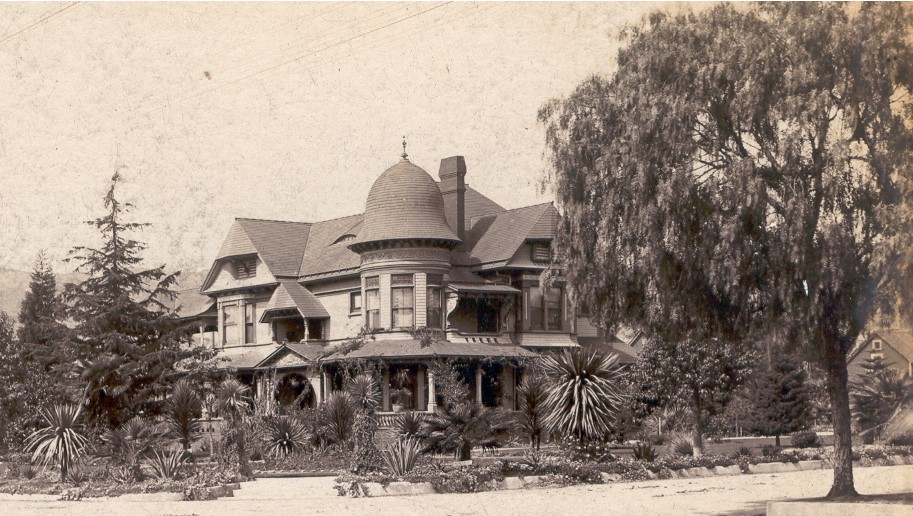
    Whitley's house on Prospect Blvd. (Hollywood Blvd)

    After securing the land, H.J. visited with his friend Ivar Weid. He told Ivar of his plans to build a town named Hollywood. Ivar Weid then told his neighbors Daeida and Harvey Wilcox of Whitley’s plan.

    Many people have been confused by an advertisement printed by the Los Angeles Litho Company, which was produced at a later date. It was added to a pamphlet given away by a bank as an advertisement. Many of the features on the map are inaccurate, and many of the buildings never existed.
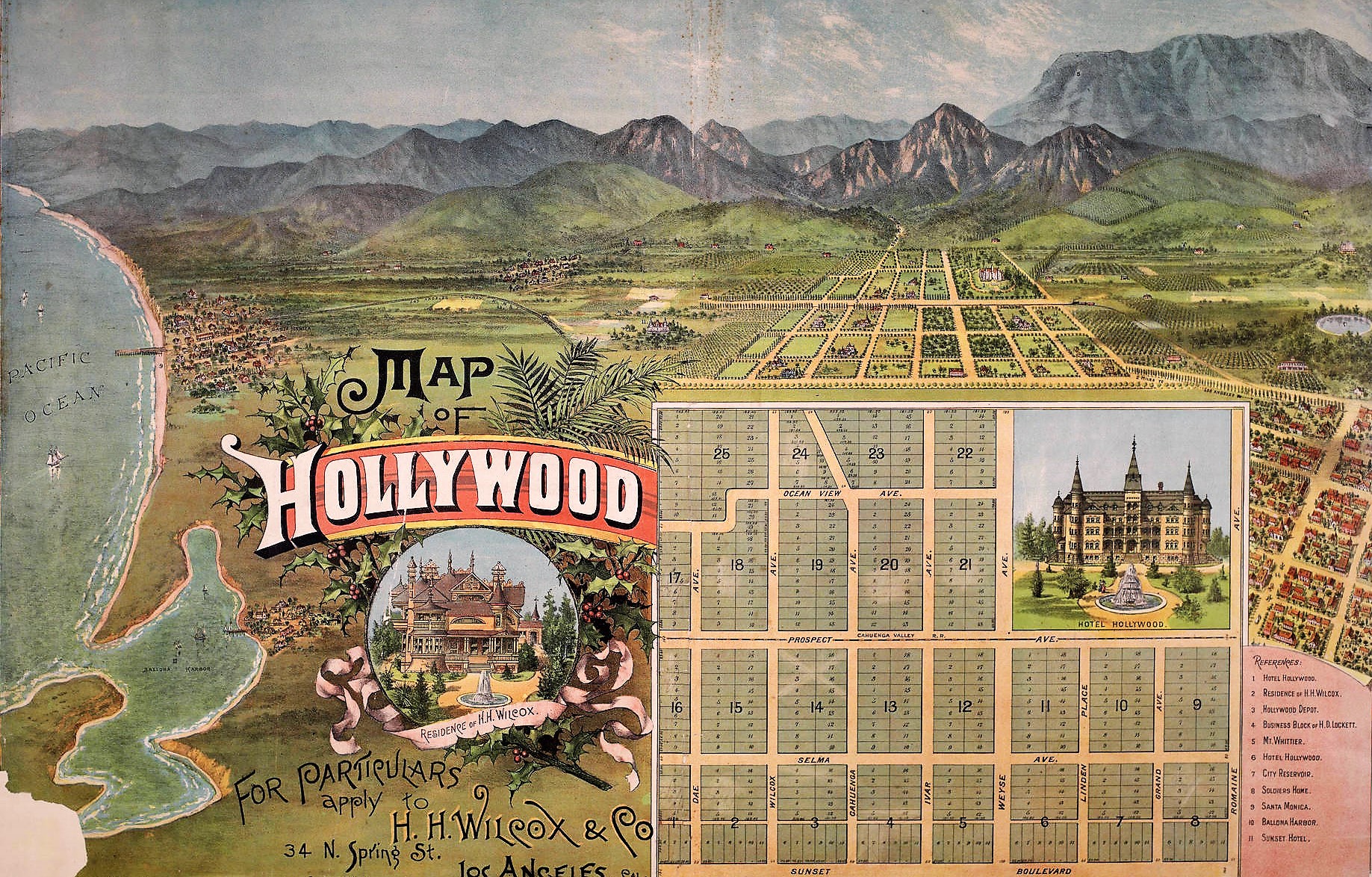
    Hollywood Wilcox Map - Los Angeles Litho Company

    Much of the misinformation currently circulating comes from Edwin Palmer. Below is a disclaimer written in the front of the book Hollywood History by Edwin O. Palmer, Edwin O. Palmer Publisher, 1936. Unfortunately, much of his misinformation was counted as a reliable source by authors who published in the 1950s onward.
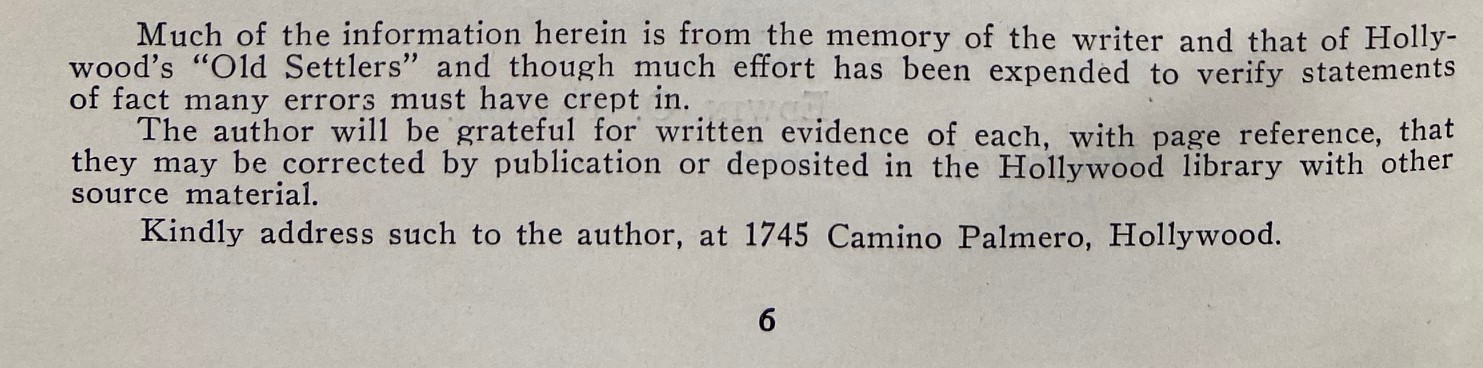
    Edwin O. Palmer Disclaimer

    The following letter addresses issues that H.J. Whitley had with Doctor Palmer, an employee of Mrs. Wilcox. He was concerned that history was being incorrectly recorded. This appears to be something we need to watch out for—history is history, and we can learn from it.
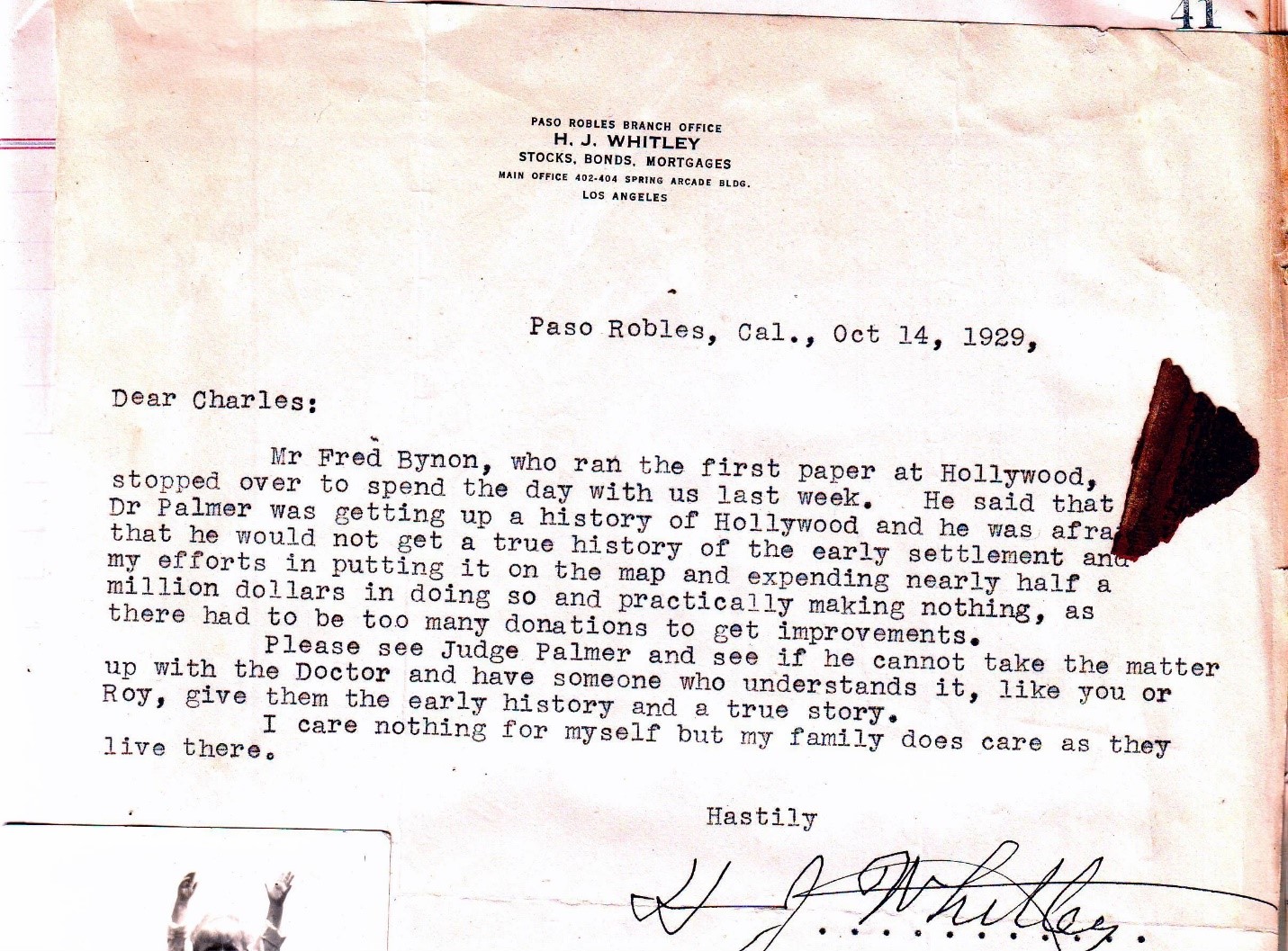
    H.J. Whitley Letter - Hollywood History Wrong 1929

    The truth is, H.J. Whitley named Hollywood in 1886.
  • Audio Book – Dreamland: New Beginnings

    This is the story of Hobart Johnstone Whitley, the visionary known as the Father of Hollywood, whose ambition and perseverance helped shape modern America and the dreamland of Hollywood itself. Alongside Gigi, whose voice and ideals illuminate his path, Whitley’s journey becomes one of love, foresight, and the cost of creation. Their tale explores the power of belief and the enduring struggle to turn dreams into a lasting legacy.

    If you prefer listen to this on YouTube click: Dreamland – New Beginning


  • Life Gave Me Lemons!

    The original saying attributed to H. J. Whitley, the Father of Hollywood, was about how Hollywood’s transformation from lemon orchards into the vibrant Film Capitol of the World as we know today. Whitley, often called the “Father of Hollywood,” bought large tracts of lemon groves and farmland with the vision of turning them into a flourishing residential and business community. The phrase emerging around this time was akin to “making lemonade out of lemons,” symbolizing the optimistic transformation of the citrus orchards into Hollywood’s first movie studio. founded by the Horsley brothers. This metaphor reflected Whitley’s own life philosophy and development strategy—turning the challenges of life into oportunities. With God’s help he started over 100 other towns across the United States. Of course Hollywood’s movie industry is a cultural force that has the oportunity to reshape the world. Wanted to share this song, it’s on the right path.

  • Why is H. J. Whitley Famous!

    Why is H. J. Whitley Famous!

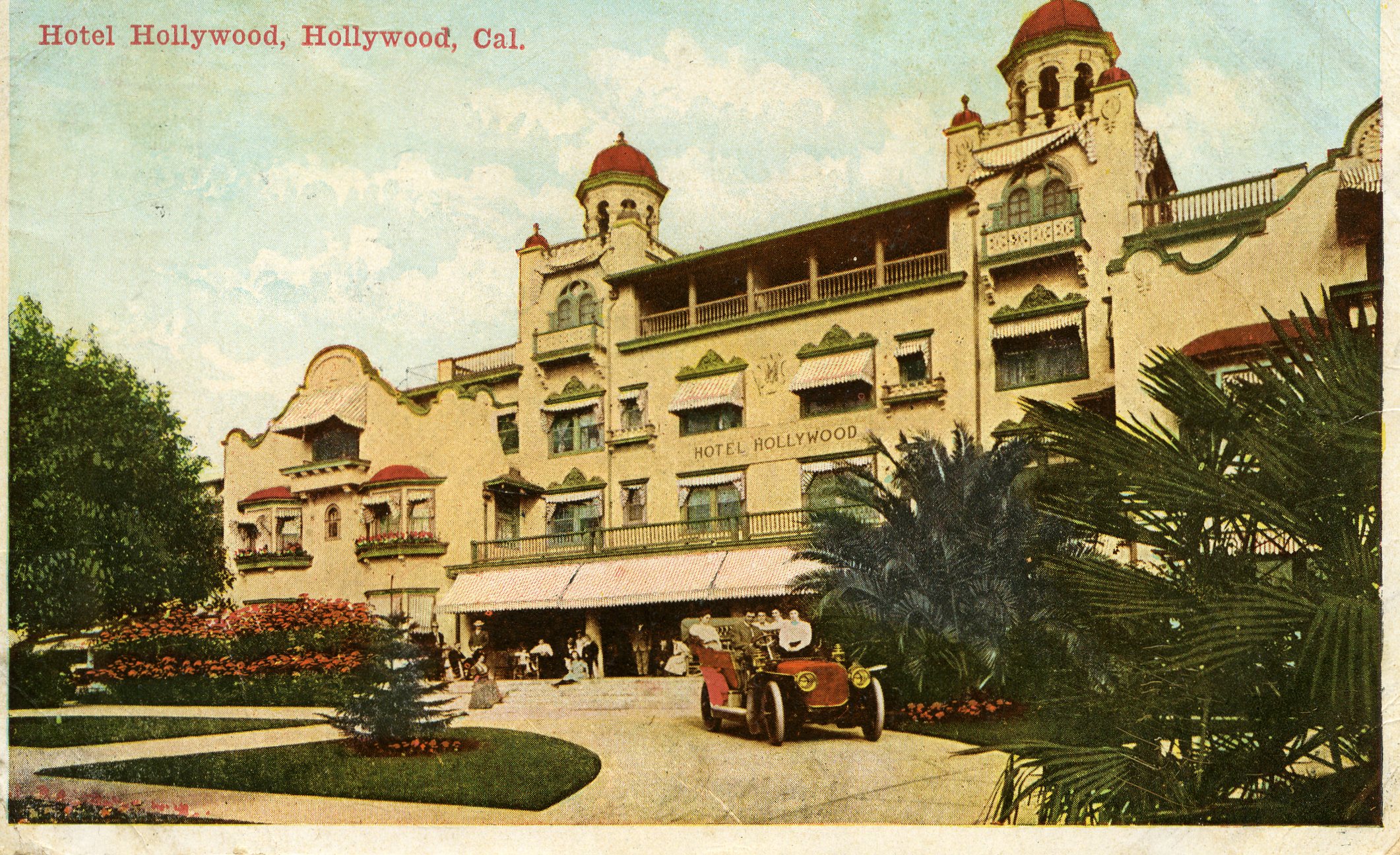
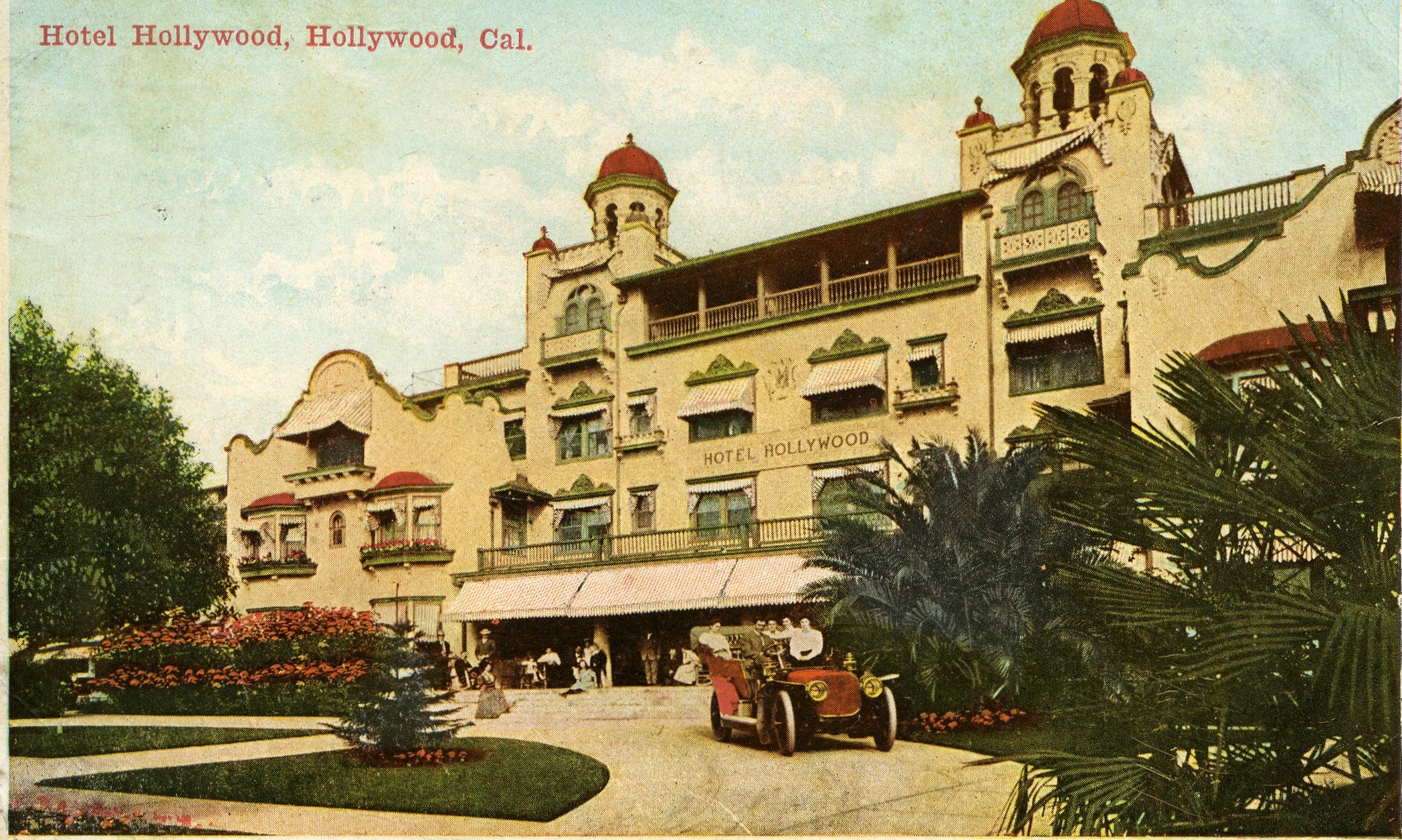
    H. J. Whitley is famous primarily for his foundational role in the development of Hollywood, Los Angeles. Known as the “Father of Hollywood,” Whitley envisioned what was once a small, rural settlement and transformed it into a thriving suburb. Arriving in California in the 1890s, he purchased and subdivided hundreds of acres of land in what is now Hollywood, actively attracting new settlers and investors to the area. His efforts included building landmarks like the original Hollywood Hotel and developing residential neighborhoods such as Whitley Heights in the Hollywood Hills.

    Hollywood Hotel, Hollywood Blvd and Highland Ave

    Whitley’s impact extended well beyond Hollywood itself. As a businessman and land developer, he was instrumental in founding or helping develop over 140 towns across the American West. Before his California endeavors, he worked as a land agent for the Rock Island Railroad and played a key role in organizing towns across Oklahoma’s Cherokee Strip and other areas. After moving to California, Whitley also led large-scale developments in regions including Corcoran and the San Fernando Valley, contributing to the urban expansion and infrastructure of greater Los Angeles.

    Guthrie OK

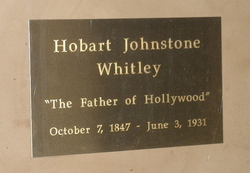
    His legacy is evident in the geography of Hollywood and Los Angeles, with streets and neighborhoods bearing his name and his title of “The Father of Hollywood” inscribed on his crypt. Through his vision and real estate ventures, Whitley helped set the stage for Hollywood’s eventual rise as the center of the American film industry, though the film studios arrived a few years after his initial developments.

    h j Whitley Grave, The Father of Hollywood

  • Disneyland California Adventure’s Whitley Building

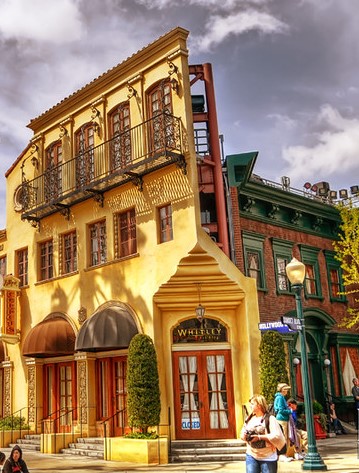
    Disneyland California Adventure’s Whitley Building

    The Whitley Building in Disneyland’s California Adventure is named in honor of HJ Whitley, known as the “Father of Hollywood”. This building of Art Deco design is located at the corner of Hollywood Blvd and Whitley Ave, a site significant for being where the first Hollywood movie studio filmed on October 26, 1911. HJ Whitley played a crucial role in the early film industry by inviting filmmakers like David Horsley and Al Christy to stay at his Hotel Hollywood, which facilitated early movie productions of the Golden Age of Hollywood.

    The Whitley Building is now where the Original Whitley Home resided on Hollywood Blvd and Whitley Ave.

  • Make Lemons into Lemonade, HJ Whitley, The Father of Hollywood

    Make Lemons into Lemonade, HJ Whitley, The Father of Hollywood

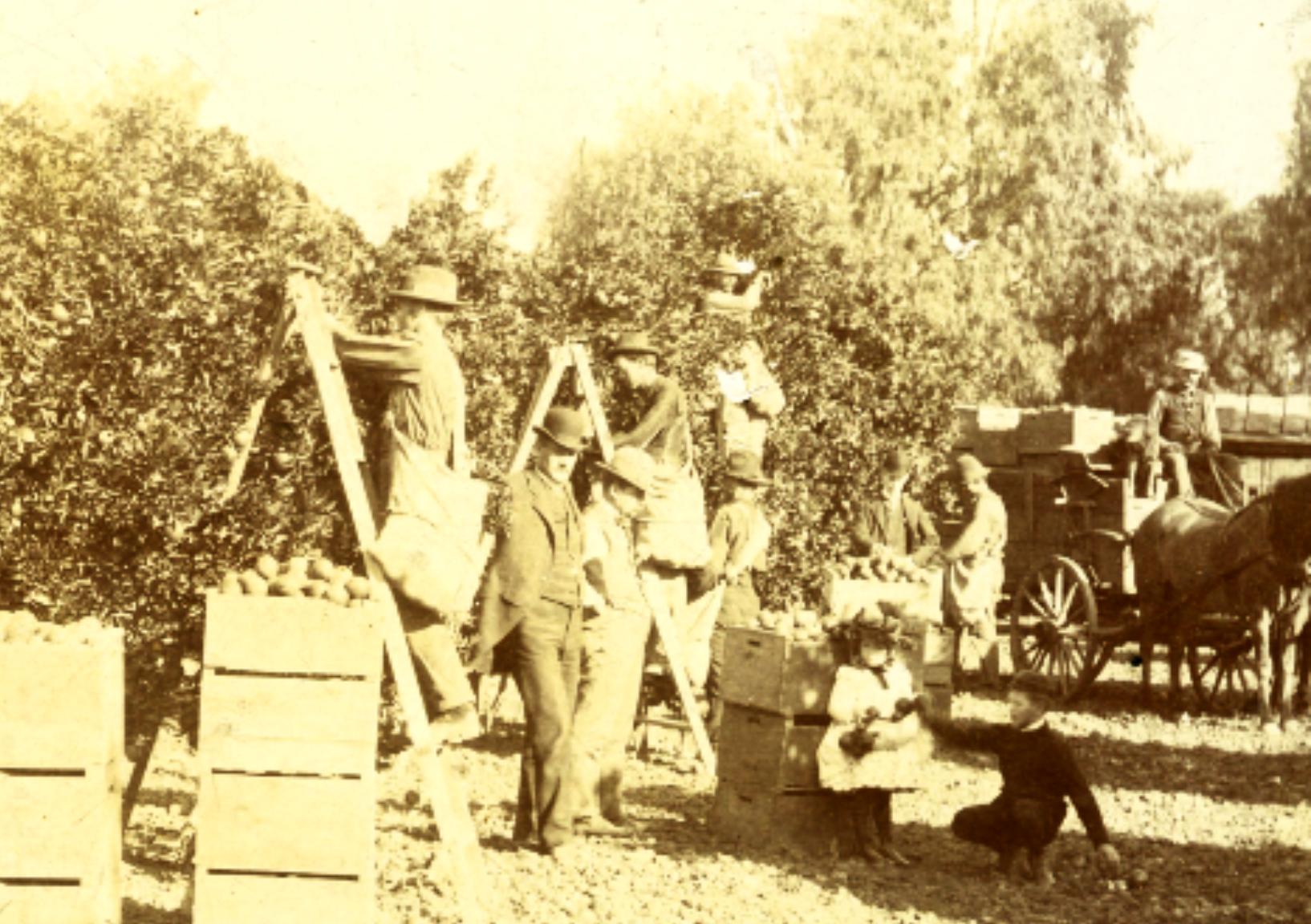
    H.J. Whitley, often referred to as the “Father of Hollywood,” is credited with popularizing the phrase “If life hands you lemons, make lemonade.” This saying emerged in the early 1910’s among Whitley’s friends as a metaphor for transforming challenges into opportunities, particularly reflecting Whitley’s own experiences in developing the lemon fields that would become Hollywood, California.
    Whitley's Hollywood estate lemon orchard HJ in derby w/ Ross & Grace playing 1902
    Whitley’s Hollywood estate lemon orchard, HJ in derby with Ross & Grace Whitley playing below & pickers harvesting.1902

  • Whitley Transforms Hollywood for Movie Industry

    Whitley Transforms Hollywood for Movie Industry

    H.J. Whitley played a crucial role in transforming Hollywood into a burgeoning film industry epicenter in 1911. He actively promoted Hollywood and provided the necessary infrastructure; Whitley created an environment that attracted filmmakers to the area. His vision and business shrewdness were instrumental in laying the foundation for Hollywood’s future as the world’s entertainment capital. Whitley’s efforts to develop the area began much earlier. In 1886, he purchased 480 acres of land in what would become Hollywood. He invested in infrastructure, including roads, train lines, and utility connections, to make the area attractive for development. Whitley also built on Hollywood and Highland boulevards the Hollywood National Bank and Hollywood Hotel, which became a popular gathering place for industry titans like Jesse Lasky, Carl Laemmle, Louis B. Mayer, and Harry Warner.
    480 acres Whitley made an agreement to purchase from EC Hurd in 1886
    HJ Whitley’s development map in Hollywood & Whitley’s House in lower corner is where the First Hollywood movie studio filmed on October 26, 1911.
    HJ Whitley's Hollywood Hotel
    The Hollywood Hotel, originally named Hotel Hollywood, was opened in December 1902 by H.J. Whitley, known as the “Father of Hollywood.

  • Whitley’s Hollywood First Movie Filmed

    Whitley’s Hollywood First Movie Filmed

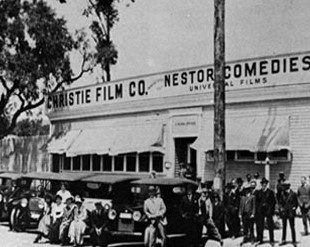
    H.J. Whitley earned the title “Father of Hollywood” for his pivotal role in bringing the first movie studio to Hollywood on October 26, 1911. He convinced David Horsley of Nestor Studio to establish their operations in Hollywood, leasing the Blondeu Tavern for $30 a month and building the first Hollywood film stage on the northwest corner of Sunset and Gower. This studio would eventually evolve into Universal Studio. Whitley’s efforts in developing the area, including bringing telephone, electric, and gas lines, as well as building the Hollywood Hotel, were instrumental in transforming Hollywood into a desirable location for wealthy residents and the burgeoning film industry.
    First Hollywood movie location 1911 at Hollywood Blvd. and Whitley Ave.
    Whitley Home at Hollywood Blvd. and Whitley Ave. where first movie was filmed in the garden.

    First Hollywood Studio 1911

    The first Hollywood Studio leased on October 27, 1911 by Nestor Studio at Sunset and Gower.